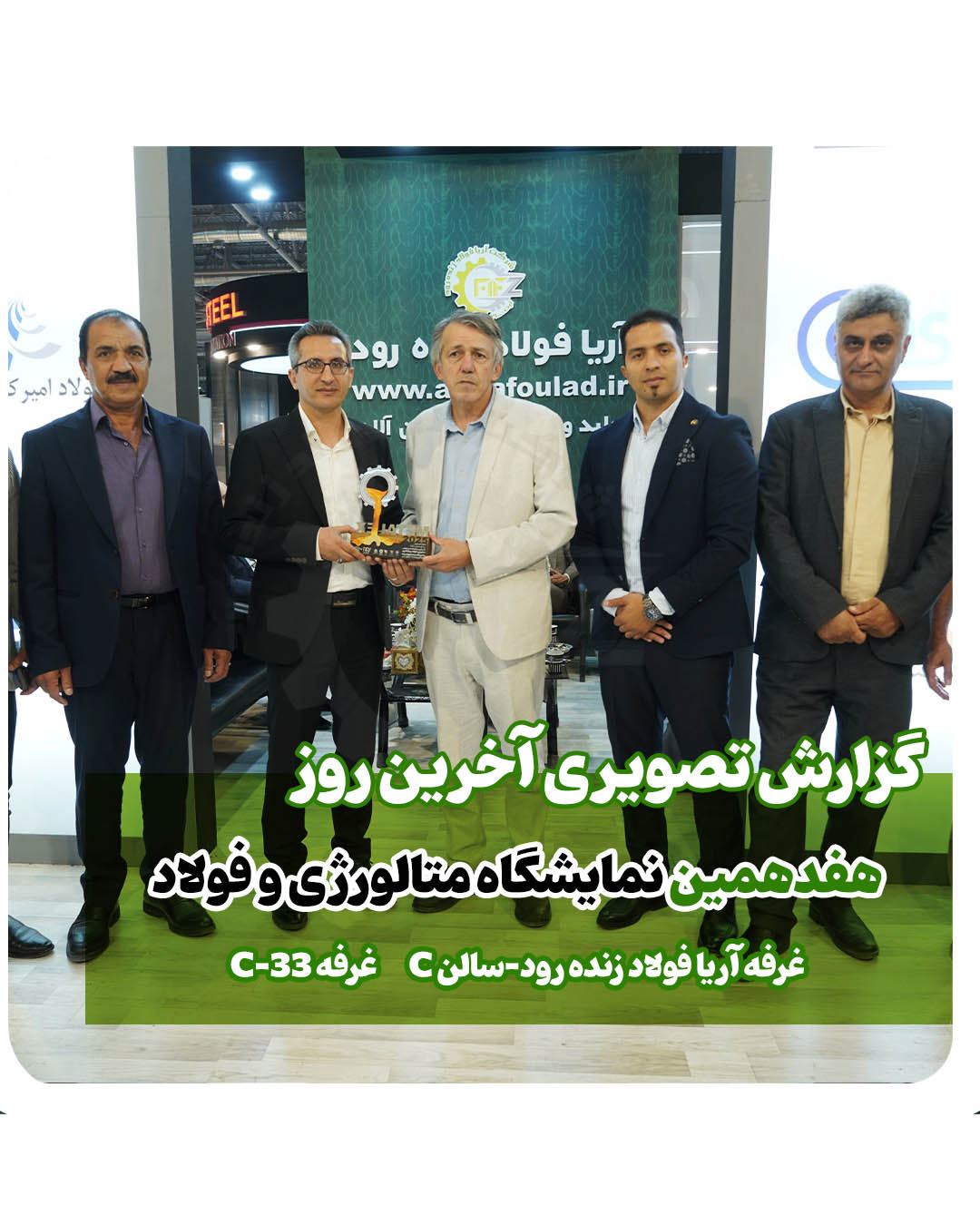
نمایشگاه حضور آریا فولاد زنده رود در نمایشگاه متافو اصفهان شرکت آریا فولاد زنده با هدف معرفی توانمندیها، محصولات و دستاوردهای فنی خود، در نمایشگاه تخصصی متالورژی اصفهان حضور یافت. این نمایشگاه از تاریخ ۱۲ تا ۱۵ شهریورماه برگزار شد و جمعی از فعالان، متخصصان و مدیران صنعت فولاد و متالورژی کشور در آن شرکت کردند. آریا فولاد زنده در طول برگزاری این رویداد، ضمن ارائه آخرین محصولات و خدمات خود در حوزه فولاد، فرصت مناسبی برای تعامل مستقیم با مشتریان، فعالان صنعتی و صاحبان صنایع فراهم کرد. کارشناسان این شرکت با حضور در غرفه، به معرفی ظرفیتهای تولید، فناوریهای بهکاررفته و برنامههای توسعهای شرکت پرداختند. حضور در نمایشگاه متالورژی اصفهان گامی مؤثر در راستای تقویت ارتباط با بازار، تبادل دانش فنی و شناسایی فرصتهای همکاری جدید برای شرکت آریا فولاد زنده بهشمار میرود. این شرکت با تکیه بر کیفیت، نوآوری و تجربه، همواره در مسیر ارتقای جایگاه خود در صنعت فولاد کشور گام برمیدارد. مطالعه
نمایشگاه حضور آریا فولاد زنده رود در متافو 2025 تهران شرکت آریا فولاد زندهرود با هدف معرفی توانمندیها، دستاوردها و محصولات خود، در بیست و دومین نمایشگاه بینالمللی متافو تهران حضور یافت. این نمایشگاه به عنوان یکی از مهمترین رویدادهای تخصصی صنعت فولاد، متالورژی، معدن و صنایع وابسته، فرصتی ارزشمند برای تعامل فعالان این حوزه و تبادل دانش فنی فراهم کرد. آریا فولاد زندهرود در این رویداد با ارائه آخرین محصولات و خدمات خود، توانست توجه متخصصان، فعالان صنعتی و بازدیدکنندگان داخلی و خارجی را به خود جلب کند. حضور کارشناسان و مدیران شرکت در غرفه آریا فولاد، زمینهساز گفتوگوهای تخصصی، بررسی فرصتهای همکاری و توسعه روابط تجاری با شرکتها و مجموعههای فعال در زنجیره فولاد شد. بیست و دومین نمایشگاه بینالمللی متافو تهران بستری مناسب برای معرفی نوآوریها، بررسی روندهای روز صنعت فولاد و آشنایی با فناوریهای نوین بود و شرکت آریا فولاد زندهرود با حضور مؤثر خود، نقش فعالی در این رویداد ایفا کرد. این حضور در راستای استراتژی شرکت برای توسعه بازار، ارتقای برند و تقویت ارتباط با مشتریان و شرکای تجاری ارزیابی میشود. در پایان، حضور آریا فولاد زندهرود در نمایشگاه متافو تهران را میتوان گامی مؤثر در جهت معرفی ظرفیتهای تولیدی، توان فنی و چشمانداز توسعه این شرکت در صنعت فولاد کشور دانست. مطالعه
مقالات فولادی بررسی کیفیت و ضخامتهای ورق گالوانیزه ورق گالوانیزه یکی از پرکاربردترین محصولات فولادی در صنایع مختلف بهشمار میرود که بهدلیل مقاومت بالا در برابر خوردگی، طول عمر مناسب و ظاهر یکنواخت، جایگاه ویژهای در بازار دارد. کیفیت این نوع ورق به عوامل متعددی از جمله ضخامت، نوع پوشش روی و فرآیند تولید وابسته است. اهمیت کیفیت در ورقهای گالوانیزه کیفیت ورق گالوانیزه مستقیماً بر دوام و عملکرد آن در شرایط محیطی مختلف تأثیر میگذارد. پوشش یکنواخت روی (Zn) باعث جلوگیری از زنگزدگی فولاد پایه شده و از آن در برابر رطوبت، مواد شیمیایی و عوامل خورنده محافظت میکند. هرچه کیفیت پوشش بالاتر و کنترل فرآیند گالوانیزاسیون دقیقتر باشد، ورق عملکرد بهتری در طول زمان خواهد داشت. از مهمترین شاخصهای کیفیت ورق گالوانیزه میتوان به موارد زیر اشاره کرد: یکنواختی و پیوستگی پوشش روی چسبندگی مناسب پوشش به ورق پایه سطح صاف و بدون موج، ترک یا لکه رعایت استانداردهای بینالمللی و ملی نقش ضخامت در کیفیت و کاربرد ضخامت ورق گالوانیزه یکی از عوامل کلیدی در انتخاب آن برای کاربردهای مختلف است. این ورقها معمولاً در ضخامتهای متنوعی تولید میشوند که هر کدام کاربرد خاص خود را دارند. ضخامتهای پایینتر معمولاً برای مصارف سبک مانند: تولید لوازم خانگی قطعات خودرو کانالهای تهویه بهکار میروند، در حالی که ضخامتهای بالاتر مناسب استفاده در: صنایع ساختمانی سولهسازی سازههای فلزی پوشش سقف و دیوارهای صنعتی هستند. انتخاب ضخامت مناسب نهتنها موجب افزایش استحکام سازه میشود، بلکه از نظر اقتصادی نیز اهمیت زیادی دارد. ارتباط ضخامت با میزان پوشش روی در ورقهای گالوانیزه، علاوه بر ضخامت ورق پایه، میزان پوشش روی نیز اهمیت دارد. پوشش روی معمولاً بر حسب گرم بر متر مربع اندازهگیری میشود و هرچه این مقدار بیشتر باشد، مقاومت ورق در برابر خوردگی افزایش مییابد. ترکیب ضخامت مناسب ورق با پوشش استاندارد روی، کیفیت نهایی محصول را تضمین میکند. جمعبندی کیفیت و ضخامت ورقهای گالوانیزه دو عامل تعیینکننده در عملکرد و طول عمر این محصول هستند. انتخاب ورق گالوانیزه با ضخامت مناسب و کیفیت بالا، ضمن کاهش هزینههای نگهداری، ایمنی و دوام سازه را افزایش میدهد. به همین دلیل، توجه به مشخصات فنی و استانداردهای تولید در هنگام خرید ورق گالوانیزه امری ضروری است. مطالعه
دستهبندی نشده Преимущества официального сайта казино Vavada Преимущества официального сайта казино Vavada Следует обратить внимание на то, что данная площадка предлагает пользователям широкий спектр развлечений, включая слоты, настольные игры и живое казино, что делает её привлекательной для различных категорий игроков. Интуитивно понятный интерфейс обеспечивает простоту навигации и комфортное взаимодействие. Актуальные бонусы и акции играют ключевую роль в повышении шансов на выигрыш и создании увлекательной атмосферы. Пользователи могут рассчитывать на приветственные предложения, а также на регулярные акции, которые постоянно обновляются. Это создает условия для продолжительной игры и удерживает интерес к сайту. Дополнительное преимущество данной платформы – это возможность играть как на компьютере, так и на мобильных устройствах без потери качества. Пользователи могут наслаждаться играми в любое время и в любом месте. Ознакомиться с возможностями на площадке можно по ссылке: Vavada. Реализация безопасных финансовых транзакций на Vavada Важно, чтобы все транзакции проходили через защищенные каналы. Платформа использует современные протоколы шифрования SSL, что гарантирует защиту личных данных и финансовой информации клиентов. Рекомендуется активировать двухфакторную аутентификацию для повышения уровня защиты аккаунта. Этот механизм добавляет дополнительный уровень безопасности при входе в систему и при выполнении финансовых операций. Все операции проверяются на наличие подозрительных действий. Это позволяет своевременно реагировать на возможные угрозы и минимизировать риски потери средств. Пользователи должны внимательно следить за своими аккаунтами и сообщать о любых несанкционированных транзакциях. Быстрая реакция может предотвратить дальнейшие проблемы. Рекомендуется использовать уникальные пароли и регулярно их обновлять. Сильный пароль должен состоять из комбинации букв, цифр и специальных символов. Системы, задействованные для обработки платежей, сертифицированы и подлежат регулярному аудиту, что подтверждает их безопасность и надежность. При возникновении вопросов или подозрений пользователи могут обратиться в службу поддержки, которая готова помочь и предоставить необходимую информацию по использованию финансовых инструментов безопасно. Широкий выбор лицензированных игр на платформе Vavada На данной платформе представлены более 2000 игр от известных производителей, таких как NetEnt, Microgaming и Play'n GO. Благодаря разнообразию игровых автоматов, настольных игр и живого казино пользователи могут выбирать среди популярных слотов, разных версий блэкджека и рулетки, а также уникальных игровых шоу. Регулярные обновления каталога обеспечивают новых игроков свежими предложениями. Лицензированные слоты с высокой отдачей. Разнообразие настольных игр с различными правилами. Качественное живое казино с профессиональными крупье. Редкие и эксклюзивные игры для искушенных игроков. Система фильтрации позволяет легко найти интересующие развлечения, а регулярные акции добавляют азарт и удерживают внимание. Выбор строгих лицензий обеспечивает безопасность и честность всех игр, что делает игровой процесс не только увлекательным, но и надежным. Поддержка пользователей: способы решения проблем и получения помощи Для быстрого решения вопросов и получения необходимой информации следуйте рекомендациям службы поддержки. На платформе доступна функция онлайн-чата, где можно задать вопросы в реальном времени. Если вы предпочитаете писать, обращение через электронную почту – удобный вариант: просто отправьте сообщение с описанием вашей проблемы на указанный адрес. Команда поддержки обычно отвечает в течение часа. Дополнительные советы Пользуйтесь разделом FAQ, чтобы найти ответы на часто задаваемые вопросы. В этом разделе собраны полезные статьи по различным темам, таким как бухгалтерия, правила игр и методы внесения депозитов. Поддержка доступна 24/7, поэтому не стесняйтесь обращаться в любое время, чтобы получить помощь или решить возникшие проблемы. مطالعه
دستهبندی نشده Вавада зеркало сейчас Зеркало Вавада доступно прямо сейчас для игроков Если вы ищете качественные впечатления в мире гемблинга, первое, что нужно сделать, это обратить внимание на vavada.com официальный сайт. Игровая площадка предоставляет широкий выбор слотов и настольных игр, что делает её излюбленным местом для многих любителей адреналина. Разделы с акциями и бонусами позволяют значительно увеличить шансы на выигрыш. Подробно изучите доступные предложения: приветственные пакеты и регулярные турниры помогут вам создать свой уникальный игровой опыт. Безусловно, не забывайте об актуальных предложениях, которые меняются от недели к неделе. Обратите внимание на функциональность платформы. Высококачественная графика и интуитивно понятный интерфейс значительно упрощают процесс выбора игр и навигации по сайту. Это особенно важно для новичков, которые могут быстро адаптироваться к условиям, не теряя времени на изучение интерфейса. Как получить доступ к зеркалу Вавада без лишних сложностей Выберите актуальную ссылку опции на сайте, чтобы без затруднений попасть к желаемым функциям. Убедитесь, что она представлена на надежных ресурсах. Запомните: такие ссылки меняются, поэтому проверяйте информацию регулярно. Пользуйтесь специализированными форумами для поиска свежих адресов. Следите за обновлениями в социальных сетях - это быстрый способ узнать о новых вариантах. Установите VPN, если возникают проблемы с доступом из вашего региона, чтобы избежать блокировок. Не забывайте сохранять актуальные ссылки в закладках браузера. Это значительно ускорит возвращение к платформе, когда возникнет необходимость. Технические особенности работы зеркала Вавада: что нужно знать Для обеспечения стабильности и безопасности предложений используется HTTPS-протокол. Он гарантирует защиту личных данных пользователей от несанкционированного доступа, что критично в сфере азартных игр. Рекомендуется проверять URL на наличие SSL-сертификата, который легче всего определить по значку замка в адресной строке браузера. При работе с альтернативными адресами стоит учитывать, что платформа оптимизирована для различных устройств. Поддержка мобильных и стационарных версий позволяет комфортно использовать интерфейс независимо от дисплея. Также важно отметить адаптивный дизайн, который динамично подстраивается под размеры экрана. Дополнительно предусмотрена система зеркала, позволяющая избежать блокировок и обеспечить быструю загрузку. Регулярные обновления софта минимизируют риски зависаний и повышают общую производительность системы. Безопасность и легальность использования зеркала Вавада для пользователей Регистрация на платформе должна быть выполнена на сайте с действующим разрешением и лицензией. Обратите внимание на наличие сертификатов, подтверждающих легальность работы. Безопасность в онлайн-гемблинге начинается с выбора платформы с аккредитацией от известных регулирующих организаций, такие как Мальтийская игровая ассоциация или UK Gambling Commission. Шифрование данных Обеспечение личной информации пользователей достигается с помощью современных технологий шифрования. Использование SSL-сертификатов позволяет безопасно передавать данные, минимизируя риск их перехвата. Это важно не только для защиты финансовой информации, но и для соблюдения конфиденциальности. Механизмы защиты Очевидным аспектом безопасности является наличие механизмов защиты от мошенничества. Эти меры могут включать: Двухфакторную аутентификацию. Мониторинг подозрительных активностей. Тщательную проверку личности игрока. Эти факторы значительно снижают вероятность мошеннических действий и обеспечивают защиту финансовых транзакций. Фактор безопасности Описание Преимущества Лицензия Разрешение от регулирующего органа Гарантия легальности и соблюдения стандартов Шифрование SSL-сертификаты Защита данных пользователей Аутентификация Двухфакторная система Дополнительный уровень безопасности Легальность операций также зависит от территории, на которой пользователи находятся. Некоторые страны имеют строгие законы о гемблинге. Поэтому важно быть в курсе местных законодательных актов, прежде чем регистрироваться на любой платформе. Рекомендуется периодически проверять обновления политик безопасности на сайте. Это позволит пользователям быть уверенными в том, что уровень защиты личной информации остается высоким и соответствует текущим требованиям индустрии. مطالعه
دستهبندی نشده Why Your Solana Wallet Extension Might Be Hiding the Full Story Whoa, this is surprising. I started tracking my Solana holdings and noticed weird gaps in history. At first I shrugged it off as UI lag. But as I dug deeper into transaction logs, staking rewards, and third-party explorers I saw patterns that didn't match what the wallet displayed, which made me dig even more and ask better questions. Here's what bugs me about portfolio views right now. Seriously, this is annoying. Initially I thought it was just a refresh issue on my browser extension. Actually, wait—let me rephrase that, it began as a refresh glitch then looked worse. On one hand the extension caches state to save bandwidth and speed, though actually when cache invalidation fails it can produce misleading balances and truncated histories that confuse casual users and professionals alike. My instinct said check settings, then check ledger exports. Hmm... somethin' feels off. I used a popular browser extension plus a desktop wallet and compared transaction histories. The extension showed pending swaps and failed transactions differently than the node logs did. If you're tracking tax lots or trying to reconcile staking yields for a quarterly report those differences matter a lot, especially when DeFi programs add program-derived-account interactions that the extension might simplify away. Okay, so check this out—there's a choice to make about trust and convenience. Where extensions fail — and a practical wallet pick Here's the thing. You can use a heavy full-node client and verify every signature manually. Or you can use a slick browser extension for speed and UX. On Solana, where block times are fast and program interactions are compact but complex, that UX trade-off sometimes strips contextual metadata from a transaction presentation, which is why tools that do deeper parsing become valuable for serious portfolio tracking. One wallet I like because of that balance (I've used it while staking at validators and interacting with Serum-style DEXs) is solflare, which offers both an extension and exportable transaction history. FAQ How should I reconcile extension data with on-chain logs? Whoa, timeline matters. That said, browser extensions can still be great if they expose exportable, auditable records. Make it a habit to export CSVs regularly and compare to raw node logs. If you're preparing records for taxes or audits, reconcile memo fields, stake accounts, validator commissions, and any program-derived-account transfers in a reproducible spreadsheet that you can share with an accountant if needed, because guesswork multiplies problems later. I'm not 100% sure about every edge case, but this workflow saved me time and headaches. مطالعه
دستهبندی نشده Why Some Tokens Explode and Others Implode: Practical DEX Aggregator, Market-Cap, and Price-Alert Playbook Why do some tokens pop overnight while others die on the vine? Whoa! My first reaction is always gut-driven—fear and excitement at once. Initially I thought the answer was just "good marketing", but then I dug deeper. The real drivers are messier: liquidity architecture, token distribution games, and how price data is surfaced in real time. Seriously? On one hand people point to shiny charts and Twitter hype, though actually there are technical signals that precede those moves. My instinct said watch volume, but that alone is misleading when liquidity is shallow. Actually, wait—let me rephrase that: volume matters, but liquidity depth and spread matter more for survivability. A coin with high nominal volume but tiny pool depth can wipe out buyers in seconds. Here's what bugs me about simple market-cap rankings. Circulating supply is often fuzzy, and teams sometimes move tokens between wallets to mask true float. That inflates market cap like a balloon that can pop when large holders sell. On-chain looks can help: check contract transfers, holder concentration, and whether the liquidity pool is owned or locked. Hmm... DeFi traders need tools that surface all of this in one pane so decisions are fast. Wow! Good aggregators will show pair liquidity, real-time trade ticks, and depth charts so you can see how much slippage a 5% buy would cause. They should also flag anomalies like sudden token mints, rug checks failing, or price oracle gaps. A healthy dashboard makes the subtle obvious. Something felt off about a token I traded last month, and that lesson stuck with me. I'll be honest — I missed some red flags. On one trade the TVL looked decent, but almost all of it was in a single unverified LP contract. When that LP was pulled intraday, price collapsed and many buyers had to take heavy losses. Here's the thing. Alert systems can prevent that, if they are configured right. Really? Yes — set alerts for sudden liquidity withdrawals, rapid holder concentration changes, abnormal transfer delays, and spikes in gas price tied to token trades. Pair alerts matter more than token alerts in many cases because a token's tradeability is only as good as the pair's liquidity. Good alerts also reduce noise by correlating volume surges with genuine on-chain liquidity and orderbook depth. If you're coding alerts, prefer on-chain event triggers rather than simple price thresholds. Blocks and mempool events tell you what's really happening before absurd trades settle. Correlate mempool front-running patterns with rapid approvals and tokenomics changes. On top of that use exponential moving thresholds so alerts scale with volatility. Wow! For market-cap analysis, I favor multiple lenses: nominal market cap, realized cap when available, and liquidity-adjusted cap. This last one divides total market cap by an effective liquidity depth score to highlight tokens that look big but are fragile. It makes you pause before treating a $200M nominal cap as safe when only $50k is accessible at low slippage. Also watch supply vesting schedules closely — large scheduled unlocks can crush prices months later. My instinct said that vesting is boring, but it's often the thing that ruins returns. Analytics teams should add holder aging metrics and percent of supply held by top 10 wallets. Those metrics are simple but reveal a lot about centralization risk. Use on-chain filters to ignore wash trades and circular trading that inflate fake volume. Auto-ignoring pairs created in the last X hours can reduce noise. Seriously? Yeah — configure the threshold carefully, because too many alerts create alert fatigue and you stop trusting the system. A layered approach works: high-severity alerts for liquidity drains, medium for abnormal volume, low for social mentions. Messy, but functional. If you want a practical next step, bookmark a dashboard that aggregates pair liquidity, holder distribution, and trade ticks in one place. I use tools that let me bind alert rules to those dashboards so I don't have to watch charts 24/7. Where I Go to Verify Fast Okay, so check this out—when I need a quick cross-check of pair liquidity, recent trades, and rug indicators I use a fast aggregator that shows live tick data and liquidity snapshots; one place I keep returning to is the dexscreener official site because it bundles pair-level details in a single view and reduces the number of tabs I keep open. Use that kind of tool to do a three-step micro-check before entering a trade: confirm pair depth and slippage estimates, scan the top holders and vesting schedule, and review the last 200 trade ticks for suspicious patterns. If any one of those is off, I step back. Somethin' about that rule has saved me from several bad trades. FAQ How should I set liquidity alerts? Prioritize alerts for percentage drops in accessible liquidity rather than absolute numbers. For volatile chains tie thresholds to average pool depth over the past 24 hours. Combine that with a trade-size sim that tells you how much slippage a typical buy will cause. What market-cap metric is least misleading? There is no perfect single metric, but liquidity-adjusted cap plus realized cap (if available) gives a clearer picture than nominal market cap alone. Also always check circulating supply provenance and scheduled token unlocks. How do I avoid alert fatigue? Layer severity and require correlated triggers — for example, only alert on liquidity withdrawal if it's accompanied by a rapid increase in outgoing transfers or a new ownership change. Tune thresholds over a few weeks so the system learns your risk tolerance. مطالعه
دستهبندی نشده Why Solana NFTs, Browser Wallets, and Solana Pay Are Suddenly the UX Winners Okay, so check this out—Solana's been quietly eating the lunch of slow chains. Wow! Transaction fees that feel like pennies, instant confirmations, and a flood of NFT projects that actually load fast. My instinct said this would be a short-lived hype. But, initially I thought scalability would bring tradeoffs in UX; then I realized that the wallet layer and payments stack are doing a lot of the heavy lifting. Really? Yes. When NFT marketplaces, browser extension wallets, and Solana Pay line up, you get a user flow that looks like modern e-commerce more than old-school crypto. Hmm... that matters. Because most people don't want to manage raw keys or wait minutes for a transfer. They want to press buy and carry on with their day. Here's the thing. NFT marketplaces on Solana are optimized for speed and low cost. Medium-sized collections and microtransactions work seamlessly. Browser extension wallets act as the local gatekeeper for identity and signatures. Solana Pay, meanwhile, gives merchants a simple protocol for fiat-like experiences. Put them together and you have a near-instant mint-to-checkout path that feels familiar to folks used to web apps. How the pieces fit (and why the wallet matters) Start with the marketplace. It lists NFTs, handles order books or buy-now pricing, and shepherds metadata. Then the browser extension wallet prompts for signature, manages tokens, and holds a UI for NFTs and tokens. Solana Pay plugs in at checkout, translating those on-chain events into merchant-friendly receipts. On one hand it's simple. On the other, the UX and security of that browser wallet determine whether users come back. Phantom-style wallets (light, browser-first) have a clear advantage here. They are built with the Solana UX assumptions in mind: discrete token accounts, fast signature prompts, and minimal friction for NFT metadata display. I'm biased, but for people exploring DeFi and NFTs on Solana, a smooth extension wallet lowers the barrier dramatically. You can check a widely used option here: https://sites.google.com/cryptowalletuk.com/phantom-wallet/ Something felt off about early wallet experiences—permissions dialogs that read like legalese, confusing token accounts, and stray popups. Those are getting cleaner. Though actually, wait—let me rephrase that: they're not perfect yet. Wallet UX has improved, but bad flows still exist (phishing dialogs still work too well). On a practical level, pick a wallet that limits permissions, provides clear signing details, and lets you toggle networks easily. Security matters. Short sentence. The extension is your local private key manager. Don't treat it like a toy. If you're storing high-value assets, use hardware wallets or multi-sig solutions (for projects). For daily NFT browsing and occasional buys, a well-reviewed browser wallet is fine, but keep seed phrases offline and never paste them into a website. Seriously? NFT Marketplaces on Solana — the good, the weird, and the practical Good: instant mints, cheap royalties, and meta-efficient collections that don't bloat the chain. Weird: a marketplace can push an update that breaks metadata links or create comparability issues across wallets. Practical: look for marketplaces that use decentralized metadata standards and provide preview images directly in the listing so your wallet can show a proper thumbnail before you sign anything. On one hand, marketplaces democratize minting and discovery. On the other hand, the speed of Solana markets means you can mis-click just as fast. My gut told me to slow down, and that remains constructive advice—confirm what you're buying, and verify collection contracts when possible. There are wallet features (view contract URL, inspect recent transactions) that help with this, but they vary by extension. Also, remember gasless illusions. While fees are low, transactions still require signatures and on-chain interactions. If a dApp promises "no gas," check what it's asking your wallet to sign—sometimes it’s approving large token allowances. That's a common surface for scams. Keep approvals granular and revoke allowances you no longer need. Solana Pay: bridging commerce and on-chain receipts Solana Pay is a simple but powerful primitive. It maps merchant invoices to on-chain payments and offers a web-native checkout that can be verified cryptographically. For artists selling NFTs or small merchants accepting crypto, that means a cleaner flow than manual transfers and screenshots. It can replace clunky payment instructions with a single signed transaction. That doesn't mean adoption is universal. Many merchants still prefer fiat rails or custodial solutions for settlement speed and chargeback handling. Yet for Web3-native shops (digital goods, limited drops, secondary market P2P trades), Solana Pay reduces friction and keeps receipts on-chain—valuable for provenance and royalties. Initially I assumed Solana Pay would be niche. But then I saw use cases—tips, instant merch drops, NFT raffles—where it made sense. Not everything should be on-chain, though. For recurring subscriptions or normalized refunds, hybrid solutions are still necessary (off-chain logic with on-chain settlement when needed). Practical tips for users in the Solana NFT + DeFi loop 1) Use a dedicated browser wallet for day-to-day activity and a separate cold storage for long-term holdings. 2) Keep approvals small and revoke them regularly. 3) Check marketplace metadata and contract addresses if you care about authenticity. 4) For payments, weigh Solana Pay's convenience against your need for merchant protections. I'll be honest: fiddly token accounts and occasional explorer outages still bug me. But the overall experience has matured. If you're new, start small. Buy a modest-priced NFT, try a simple swap, and watch how your chosen wallet surfaces data (token balance, recent transactions, NFTs). That gives you a baseline for what "normal" looks like in your client. FAQs Do I need a browser extension wallet for Solana NFTs? Short answer: yes for convenience. Browser extension wallets streamline signatures and integrate with marketplaces. They're the quickest path to minting and trading. If you're only viewing, you can use wallet-less viewers, but buying and signing require a wallet. Is Solana Pay safe for merchants? Solana Pay is cryptographically sound for payments, but merchants should pair it with off-chain reconciliation and fraud rules. For one-off digital goods it's great; for complex refunds or disputes you need hybrid processes. How do I avoid scams when buying NFTs? Verify contract addresses, check metadata sources, restrict approvals, and use wallets that show full transaction details before signing. If a deal looks too good or the site pushes urgent prompts, pause—breath—and inspect. Somethin' as simple as that often saves headaches. مطالعه
دستهبندی نشده Why Monero Still Matters: Practical Privacy for Real People Whoa! I remember the first time I sent XMR—my heart did a weird little jump. Something felt off about how much tracking there was around every other payment system, and my instinct said: try somethin' different. Initially I thought privacy coins were niche, only for the techy crowd, but then I started seeing everyday use-cases where privacy actually solved real problems. On one hand privacy sounds like paranoia; on the other hand it's a basic civil liberty that we give away far too cheaply. Seriously? Yes. Many folks treat "anonymous" like a magic switch. But anonymity is a spectrum, and Monero gets you a lot further down that road than most coins. It uses ring signatures, stealth addresses, and confidential transactions to hide senders, recipients, and amounts. Those are fancy words, sure, but they mean you can transact with less fear that a casual ledger search will reveal your whole financial life. I'm biased, but this part really bugs me: people sign up for platforms without thinking about how every payment paints a clearer picture of them. Whoa! Okay, so check this out—wallet choice matters. Wallets are the interface between you and privacy. Pick a poorly maintained wallet and you might leak your IP, your transaction habits, or even parts of your seed. Run-of-the-mill advice like "use official software" is accurate, though actually the nuance is deeper: verify releases, prefer wallets that let you connect to your own node, and avoid third-party services that collect metadata. My instinct said "run your own node," and after messing with setups coast-to-coast, I can confirm it's worth the time if you're serious. Hmm... Let me rephrase that. Running your own node isn't required for everyone, but it raises the bar for surveillance significantly. On one hand it's extra work; on the other, it gives you control and reduces reliance on trust. For many users, a trusted remote node is a pragmatic compromise—just make sure the node is reputable and ideally run by someone you actually trust. The reality: convenience often wins, but convenience can cost you privacy slowly, very very slowly, until patterns emerge. Choosing a Wallet — Start With the Official Option Here's the thing. Not every wallet on the internet is created equal. If you want a sane starting point, check the xmr wallet official page and follow the guidance there—verify downloads, read the release notes, and opt for clients that respect privacy defaults. Wallets vary in features: some prioritize usability, others control, and a few sacrifice privacy for convenience. Pick what aligns with your threat model. Whoa! Short list first. Use official builds when possible. Verify signatures before you install. Prefer hardware wallets for long-term storage. And yeah, back up your seed in multiple secure places. Now, a little deeper: seeds are the master keys to your funds; treat them like actual keys to your house. If someone else gets them, your privacy or possession protections evaporate, fast. Hmm... Something I learned by screwing up once: storing a seed on a cloud drive felt convenient, and then I had a minor panic. My working conclusion changed after that episode—offline, air-gapped backups are worth the extra thought. Initially I figured digital backups were fine, but then I realized that ease-of-access equals risk. On the bright side, a laminated paper seed locked in a safe or a split passphrase using Shamir's Secret Sharing are both decent approaches depending on how paranoid you are. Seriously? Network privacy matters too. Use Tor or I2P when connecting to nodes if you don't run one yourself. Some wallets simplify this with built-in proxy options, while others require manual setup. On one hand Tor can be slower and occasionally finicky; though actually it's a small price to pay for obscuring who is talking to which node. If you're doing a routine coffee-shop transaction, shielding your IP is often the difference between plausible deniability and a breadcrumb trail. Whoa! Transaction hygiene matters. Make it a habit to rotate addresses and avoid reuse. Don't post receipts with transaction IDs on public forums. Merge operations and sweep transactions can leak linkable information if you aren't careful. My advice? Treat transactions like sending snail mail from a crowded mailbox — mix and match where practical, and avoid doing everything in one visible place. Common Questions People Actually Ask Is Monero truly anonymous? Short answer: it's much more private than most coins, but "truly anonymous" is a stretch if you mean perfect, unstoppable secrecy. Monero's default privacy features make it very hard to link senders and recipients on-chain, though network-level leaks, wallet misconfiguration, or adversaries with lots of side information can still cause deanonymization. Initially I thought it was invincible, but then I read case studies where operational security mistakes—they're the weak link—undid privacy. Should I run a full node? Running a full node strengthens your privacy and gives you independent verification of the blockchain, but it requires disk space and some maintenance. For many people, a trustworthy remote node is a good middle ground—just be aware of the trust trade-offs. If you can afford the hardware and the time, run a node; your future self will thank you. Can exchanges deanonymize me? Yes. Exchanges that require KYC will link your identity to transactions if you send funds there. Use caution. On one hand exchanges are convenient for liquidity; on the other, they create audit trails that defeat privacy. My rule of thumb: limit what you deposit to KYC services, and don't mix privacy-focused funds into KYC accounts unless you accept the linkage consequences. Whoa! A closing thought—well, not a final wrap, but a nudge. Privacy isn't a one-time setup; it's an ongoing practice. Some days you'll be diligent, other days you'll slip. That's human. What's actionable is small habits: verify wallet binaries, back up seeds offline, prefer privacy-respecting defaults, and be mindful of network-level identity leaks. I'm not 100% perfect at this, but I've learned enough to know the cheap path usually costs more later. Hmm... So what should you do tomorrow? Try the official wallet, test a small transaction, and consider whether running a node fits your lifestyle. If you value privacy even a little, these steps are worth the effort. Okay—go be careful out there, and remember: privacy is not selfishness; it's self-respect. مطالعه
دستهبندی نشده Why Monero Feels Different: Untraceable Transactions and Real Privacy Whoa, this surprised me. I remember the first time I sent XMR and felt a real wash of relief — like closing a door on a noisy porch. Monero's privacy isn't just checkbox privacy; it's operational privacy that changes the way you think about value transfer in public networks. I'm biased, but privacy matters to me in the same way seatbelts do: you hope you never need them, but you sure feel better wearing one. Initially I thought privacy coins were niche, then I realized they were foundational to how money should behave in a free society. Really? Yes, really. Okay, so check this out—monero's design choices are oriented toward default privacy; there are no optional knobs you must enable and forget. On one hand that simplicity is a huge win for everyday users, though actually, wait—let me rephrase that: the defaults make practical privacy accessible, but they also require users to trust that the tech works as advertised. My instinct said "solid," but then I dug into ring signatures, stealth addresses, and confidential transactions to see how the sausage is made. Here's the thing. The moment you stop treating every transaction like a public announcement, your mental model of money shifts. Transactions that once felt obvious become hidden in plain sight, and that changes behavior. At first glance the math looks like obfuscation for obfuscation's sake, but the underlying choices—decoupling sender and receiver, obscuring amounts—are deliberate protections against profiling, chain analysis, and casual snooping. Hmm...somethin' about that feels honest. The protocol uses ring signatures to mix outputs, which reduces linkability. Seriously? Yes. The cryptography blends plausible deniability with real-world usability, and that tradeoff is rare. On a technical level, that means you can't reliably say "these two transactions are from the same wallet" with any high degree of confidence—unless the user screws up or leaks metadata off-chain. How Monero Makes Transactions Untraceable Whoa, short version first. Ring signatures, stealth addresses, and RingCT (Ring Confidential Transactions) work together to hide participants and amounts. Medium summary: ring signatures mix a real input with decoys so observers can only guess which one is real, stealth addresses generate one-time public keys for each payment so receivers aren't tied to a single address, and RingCT hides the transferred amount while preserving balance math. On a deeper level the design resists deterministic heuristics used by chain analysis firms. Initially I thought "chain analysis has us beat," but then realized Monero's primitives intentionally break those heuristics—so tools that work on transparent chains are often useless here. Actually, wait—let me rephrase that: forensic companies can still do impressive work, but their approaches need different data sources and much more uncertainty when dealing with privacy-preserving outputs. Here's what bugs me about mainstream crypto narratives: people talk about privacy like it's a binary light switch—on or off. That framing is unhelpful. Privacy is a spectrum, and Monero deliberately shifts the default toward being private by design. The cumulative effect is behavioral: fewer accidental leaks, fewer patterns to exploit, and a lower baseline of exposure for users who don't obsess about OPSEC. Hmm, let me be practical. In my daily use, I treat Monero like cash. Hmm... I'm not 100% perfect here, but I try. If you send XMR to a vendor, their receipt doesn't fossilize a buyer's identity on a public ledger for posterity. That matters in many cases—political donations, personal safety, salary privacy, vendor discretion. Those are all mundane things, yet the consequences of exposure can be severe. Whoa—this part gets messy. Privacy isn't only about tech; it's also about metadata and human behavior. You can use perfect cryptography and still leak your identity through timing patterns, IP addresses, or reused touchpoints. On the other hand, Monero reduces the surface area that adversaries can exploit on-chain, and that's a real advantage if you pair it with decent operational practices. Seriously? Yup. A very important step is using a good wallet that prioritizes privacy norms. If you run a remote node or use a trusted remote node, that choice affects your network-level privacy. The easiest path for most people is a wallet that handles complexities for you, reducing mistakes and accidental exposures. For a straightforward, privacy-friendly option, try the monero wallet I keep recommending; I like how it balances usability with safe defaults. Whoa, small aside—I'm biased toward simple UX. This part bugs me: many privacy tools scare average users away with jargon. If Monero is to matter beyond enthusiasts, the UX needs to be friendly. On the flip side, some UX shortcuts can degrade privacy, so there's an ongoing tradeoff. Designers and engineers keep iterating to find that sweet spot between "secure" and "usable." Okay, so check this out—opponents will say "privacy coins enable bad actors." Hmm. My gut reaction is mixed. On one hand, bad actors do use privacy tools; though actually, wait—let me rephrase that: the same privacy that can be misused also protects ordinary people from predation, extortion, and surveillance. The ethical argument isn't settled by anecdotes; it's a policy question about balancing rights and risks. On a technical note, regulatory pressure has pushed exchanges and service providers to treat privacy coins differently. That has real implications for liquidity and onboarding. Initially I thought regulation would stifle privacy tech entirely, but then I realized that decentralized adoption and sovereign use-cases often continue regardless—users find ways to access tools they need. Still, the ecosystem adapts and sometimes suffers short-term friction. Here's the thing about anonymity sets. Bigger is better. The protective value of ring signatures increases as more outputs exist to hide among. That makes network adoption and consistent use important; if only a tiny group uses privacy-preserving features, their safety is weaker. So adoption is not merely vanity metrics—it's a material security property. Whoa, another human note: wallets matter. Bad wallet UX or careless custodial services can leak info that nullifies cryptographic protections. I'm guilty of rushing once and posting a transaction screenshot that revealed a balance. Really poor OPSEC on my end. You can do everything right on-chain and still reveal yourself by habit, so education and tooling are both crucial. Hmm, practical ops guide in a few lines. Use privacy-respecting wallets, avoid posting raw transaction screenshots, run your own node if you can, and mix times of sending funds across days rather than all at once. These are simple, and they add up. I'm not a preachy doomsayer, but I do care about making this accessible for people who just want to use money privately. Whoa—let's talk about tradeoffs. Privacy comes at cost: larger transactions, slightly heavier verification, and a smaller ecosystem of on-ramps. For many use-cases these costs are minor compared to the benefit. On the other hand, certain low-friction services still lag until liquidity grows. That doesn't mean the tech is broken—just that adoption and infrastructure evolve slower than ideal. Here's what excites me: ongoing research continually improves efficiency and privacy guarantees. Bulletproofs shrunk transaction sizes. Ongoing protocol upgrades refine ring signature algorithms and consensus adjustments. Initially I assumed you'd reach a ceiling, but the field keeps surprising me with clever optimizations that reduce costs while maintaining protections. Hmm... there's also the social layer. Community norms around sharing addresses, fundraising, and merchant adoption shape privacy effectiveness. The more people treat privacy as normal, the better everyone is protected. I'm not 100% sure how fast cultural shifts happen, but small habits compound—very very important to remember that. Whoa—before you go, a quick practical thought. If you want to try Monero, pick a wallet that balances usability and privacy defaults right away. Try small amounts, test receipts, and don't be afraid to ask community folks for setup tips (many are friendly, not all, but most). And remember: even a modest move to privacy can reduce your exposure significantly. FAQ Are Monero transactions truly untraceable? No single system is perfect, but Monero significantly reduces traceability compared to transparent ledgers. The combination of ring signatures, stealth addresses, and RingCT means observers face meaningful uncertainty. Operational mistakes or metadata leaks can still undermine privacy, so good practices are necessary. Will using Monero get me in legal trouble? I'm not a lawyer, but privacy tech is legal in many places. Regulatory landscapes vary and can change. Using privacy tools for lawful purposes is generally permissible; misuse of any money system can have legal consequences. Stay informed and consider local rules. How do I get started safely? Start with a user-friendly, privacy-focused wallet, test with small amounts, and slowly get comfortable. Running your own node is best for network privacy but not strictly required. For an accessible option that keeps privacy as a priority, try the monero wallet—I mention it because I like its defaults and it nudges users toward safer habits. مطالعه